
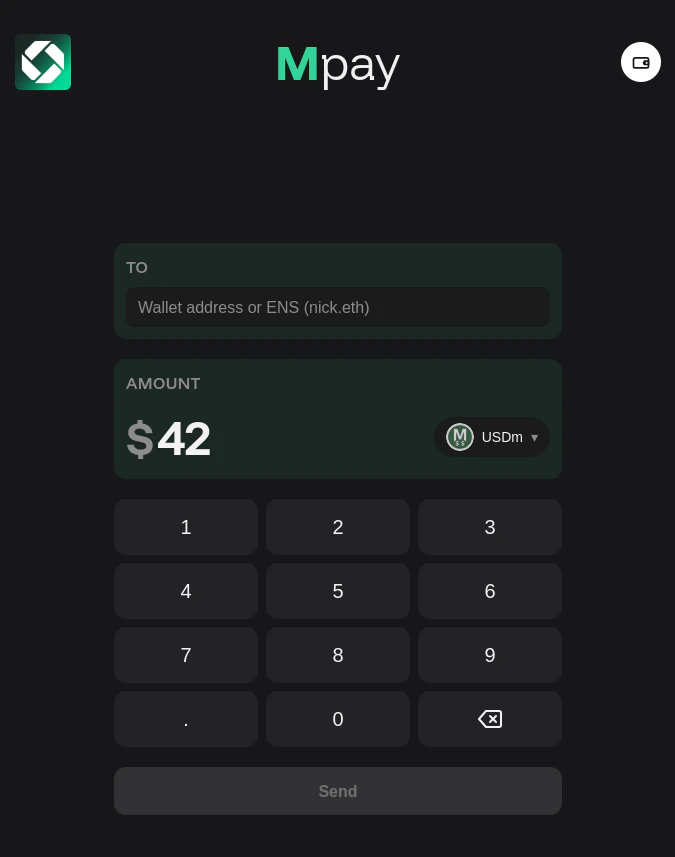
How Mpay works
Mpay uses one of two signing standards depending on the token being transferred:1. x402 using EIP-3009
For tokens that support EIP-3009, Mpay uses an x402-style flow where the user, or an agent acting on the user’s behalf, signs an off-chain payment authorization. The transfer is then executed from that signed message without requiring the user to submit an onchain transaction themselves. This path is efficient, but support is still limited across the ERC-20 ecosystem. In practice, the main supported token today is USDC.2. ERC20Permit using EIP-2612
For other supported tokens, Mpay uses ERC20Permit under EIP-2612. In this flow, the user signs a permit message that grants approval to the Meridian protocol contract, and the contract executes the token transfer. The standard is different, but the user experience is the same: sign once, then the tokens move.Shared security guarantees
Both flows rely on the same core protections:- EIP-712 typed data for human-readable signing prompts.
- Nonces to prevent replay attacks.
- Expiry windows so signatures are only valid for a limited time.
- No private key exposure, since signing happens client-side and keys never leave the wallet.
Supported destinations
Mpay supports gasless transfers to:- ENS names
- Wallet addresses